Seoul vs Jeju
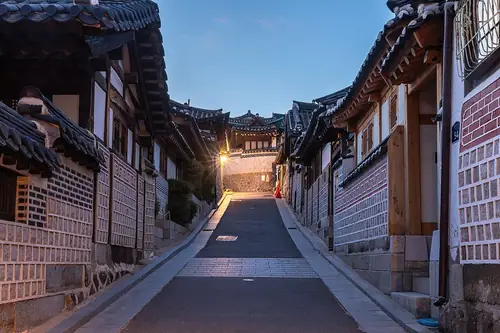
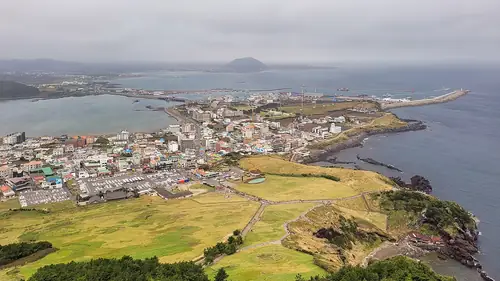
Which would you pick?
The short answer
They cost about the same day to day — Seoul $80–160, Jeju $75–150 mid-range per person. Both Seoul and Jeju are at their best in Apr–May, Oct, so one trip can take in both.
Is Seoul cheaper than Jeju?
Not by much: Seoul and Jeju cost about the same day to day, within 6% of each other ($80–160 against $75–150 mid-range per person).
- A cheap local meal costs much the same in both: $5–8 in Seoul, $5.50–9 in Jeju.
- A mid-range hotel night starts about 14% lower in Jeju ($60–130) than in Seoul ($70–140).
- A single transit ride starts about 14% lower in Jeju ($0.90–1.40) than in Seoul ($1.05–1.20).
Side by side
Seoul and Jeju side by side, mid-range per person in US dollars, both costed the same way (how we work these out).
| 🇰🇷 Seoul | 🇰🇷 Jeju | |
|---|---|---|
| Daily budgetmid-range, per person | $80–160 | $75–150 |
| Cheap meallocal staple | $5–8 | $5.50–9 |
| Mid-range hotelper night | $70–140 | $60–130cheaper |
| Transit ridesingle trip | $1.05–1.20 | $0.90–1.40cheaper |
| Avg. monthly salarylocal, for context | ≈ $2,730 | ≈ $2,300 |
What 3 and 7 days cost in Seoul and Jeju
| Trip, per person | Seoul | Jeju |
|---|---|---|
| 3 daysmid-range | $240–480 | $225–450 |
| 7 daysmid-range | $560–1,120 | $525–1,050 |
| 3 daysbudget | $150–285 | $135–270 |
| 7 daysbudget | $350–665 | $315–630 |
Over a full week Seoul costs about $53 more per person than Jeju.
Against local wages, one mid-range visitor day costs about 4% of an average monthly salary in Seoul (≈ $2,730) and 5% in Jeju (≈ $2,300).
The cheapest beds listed are $14–24 a night in Seoul (Hostel dorm) against $14–24 in Jeju (Hostel / guesthouse dorm), while the top tier starts around $240 in Seoul and $207 in Jeju.
Per person and before flights, from each guide's daily budget, which already includes a mid-range room; budget rows use the guides' 60% budget scale.
When to go
Filled months are the ones each guide recommends; hollow ones it warns off.
| Month | Seoul | Jeju |
|---|---|---|
| January | Avoid | So-so |
| February | So-so | So-so |
| March | So-so | So-so |
| April | Good | Good |
| May | Good | Good |
| June | So-so | Good |
| July | So-so | So-so |
| August | So-so | So-so |
| September | So-so | Good |
| October | Good | Good |
| November | Good | So-so |
| December | So-so | So-so |
Both Seoul and Jeju are in season in Apr–May and Oct, the window for a trip that takes in both.
In Nov only Seoul is at its best, while Jeju's guide doesn't recommend that month.
In Jun and Sep it flips: Jeju is in season and Seoul isn't.
Which one suits you
🇰🇷 Pick Seoul over Jeju for
- Palaces & history, which only the Seoul guide lists against Jeju: Gyeongbokgung Palace (the main Joseon royal palace, burned by invasion and rebuilt, with a changing-of-the-guard ceremony…).
- Markets & food, which only the Seoul guide lists against Jeju: Gwangjang Market (the oldest market in the city and the best cheap eating in it).
- Travelling in Nov, when Seoul is in season and Jeju isn't.
- A longer, slower stay: the Seoul guide suggests four days, the Jeju guide three days.
🇰🇷 Pick Jeju over Seoul for
- A cheaper hotel room: $60–130 in Jeju against $70–140 in Seoul.
- Volcanic landscape, which only the Jeju guide lists against Seoul: Seongsan Ilchulbong (a tuff cone that erupted out of the sea 5,000 years ago, with a…).
- Coast & culture, which only the Jeju guide lists against Seoul: Haenyeo diving demonstrations (the 'sea women' who free-dive for shellfish without air tanks, a matriarchal tradition on…).
- Travelling in Jun and Sep, when Jeju is in season and Seoul isn't.
- A shorter stop: the Jeju guide suggests three days, the Seoul guide four days.
One day in Seoul against one day in Jeju
- Morning: in Seoul, Gyeongbokgung at opening, timed to catch a changing of the guard, then up the hill into Bukchon Hanok Village; in Jeju, Seongsan Ilchulbong at sunrise, which is about 25 minutes up to the crater rim.
- Midday: in Seoul, Gwangjang Market: sit at a stall, point at what the next person is eating, repeat; in Jeju, a haenyeo village nearby for whatever has just been landed, bought from the divers themselves.
- Afternoon: in Seoul, Ikseon-dong's hanok alleys, which are Bukchon's charm without the signs asking you to be quiet; in Jeju, Manjanggul lava tube: a kilometre of cold, dark, genuinely strange walking.
- Evening: in Seoul, Hongdae for buskers, cheap food and a noraebang if the night heads that way; in Jeju, back to Jeju City for black pork over charcoal, with anchovy sauce rather than the mainland's ssamjang.
Slot by slot from each guide's one-day plan; the full Seoul and Jeju itineraries go to five days.
What you'd actually do
A few of each guide's picks, one per category before seconds — the full lists are on the guides themselves.
🇰🇷 Seoul
Six-hundred-year-old palaces between glass towers, mountains at the end of the subway line, and a city that genuinely does not sleep. The easiest big Asian city for a first-timer, and cheaper than Tokyo.
- Gyeongbokgung Palace$Palaces & history
- Gwangjang Market$Markets & food
- Hongdae$Neighbourhoods
- Jjimjilbang$Korean experiences
- Changdeokgung & the Secret Garden$Palaces & history
🇰🇷 Jeju
A volcanic island south of the peninsula with its own dialect, its own myths and a dormant peak in the middle of it. Korea's holiday island — hiking, lava tubes, black rock coastline and women who free-dive into their eighties.
- Seongsan Ilchulbong$Volcanic landscape
- Haenyeo diving demonstrations$Coast & culture
- Jeju black pork$$Food
- Hallasan$Volcanic landscape
- Jusangjeolli cliffs$Coast & culture
Practicalities
| Seoul | Jeju | |
|---|---|---|
| Language | Korean. English signage is excellent on transport and at sights; conversational English is patchier than in Japan's tourist areas | Korean. Jeju has its own language, now endangered and mostly spoken by the elderly. Less English than Seoul |
| Currency | Korean won (₩). Around ₩1,450 = $1 in mid-2026, but the won moves — check before you convert | Korean won (₩), around ₩1,450 = $1 in mid-2026 |
| Time zone | KST (UTC+9). No daylight saving | KST (UTC+9) |
| Power | 220V, Type C/F — the round two-pin European plug, not the flat Japanese one | 220V, Type C/F — round two-pin European plug |
| Tap water | Safe to drink, though most Koreans drink filtered water at home and from office dispensers | Safe, and Jeju's volcanic groundwater is bottled and sold across Korea |
| Emergency | 112 police · 119 fire and ambulance · 1330 tourist helpline (24h, English) | 112 police · 119 fire and ambulance · 1330 tourist helpline (English, 24h) |
Getting between Seoul and Jeju
What the Jeju guide says about reaching Seoul:
- If you want landscape and slowness alongside the cities, yes — it's an hour's flight from Seoul, often under $55, on one of the busiest air routes in the world.
Staying, getting around, money and safety in Seoul and Jeju
First-timers usually base themselves in Myeongdong or Jongno & Insadong in Seoul, and in Jeju City or Seogwipo in Jeju.
Tipping differs: in Seoul, not practised, at all; in Jeju, not practised, as everywhere in Korea.
The Seoul guide warns about 4 scams (Itaewon and Hongdae bar 'hosts', Unlicensed taxis at the airport, Forgetting to tap off the bus), the Jeju guide about 4 (Car rental insurance upsells, Renting without an International Driving Permit, Seafood pricing by weight).
Day to day, the Seoul guide covers getting around by Subway, buses and taxis, the Jeju guide by car rental, buses and taxis.
On cash and cards, the Seoul guide says Korea is close to cashless, while the Jeju guide says cards work nearly everywhere, as across Korea, but carry some cash for small rural restaurants, market stalls and the haenyeo diving huts that sell what they've just caught.
For mobile data in Seoul, Among the best on earth; in Jeju, good coverage across the populated coast and both cities, weaker on Hallasan's upper trails and in some interior areas.
On safety, the Seoul guide's verdict is “Seoul is one of the safest large cities anywhere” and the Jeju guide's is “Very safe in terms of crime, like the rest of Korea.”
Seoul vs Jeju: common questions
Is Seoul cheaper than Jeju?
Not by much: Seoul and Jeju cost about the same day to day, within 6% of each other ($80–160 against $75–150 mid-range per person). A cheap local meal costs much the same in both: $5–8 in Seoul, $5.50–9 in Jeju.
When is the best time to visit Seoul and Jeju?
Seoul is at its best in Apr–May and Oct–Nov and Jeju in Apr–Jun and Sep–Oct; the months they share are Apr–May and Oct.
How many days do you need for Seoul and Jeju?
The Seoul guide recommends four days and the Jeju guide three days, so allow about 7 days to see both without rushing.
Can you combine Seoul and Jeju in one trip?
Yes: Seoul and Jeju are both in South Korea, so one set of entry rules covers the whole trip. If you want landscape and slowness alongside the cities, yes — it's an hour's flight from Seoul, often under $55, on one of the busiest air routes in the world.
More comparisons with Seoul or Jeju
Or read the guides to the nearby alternatives: